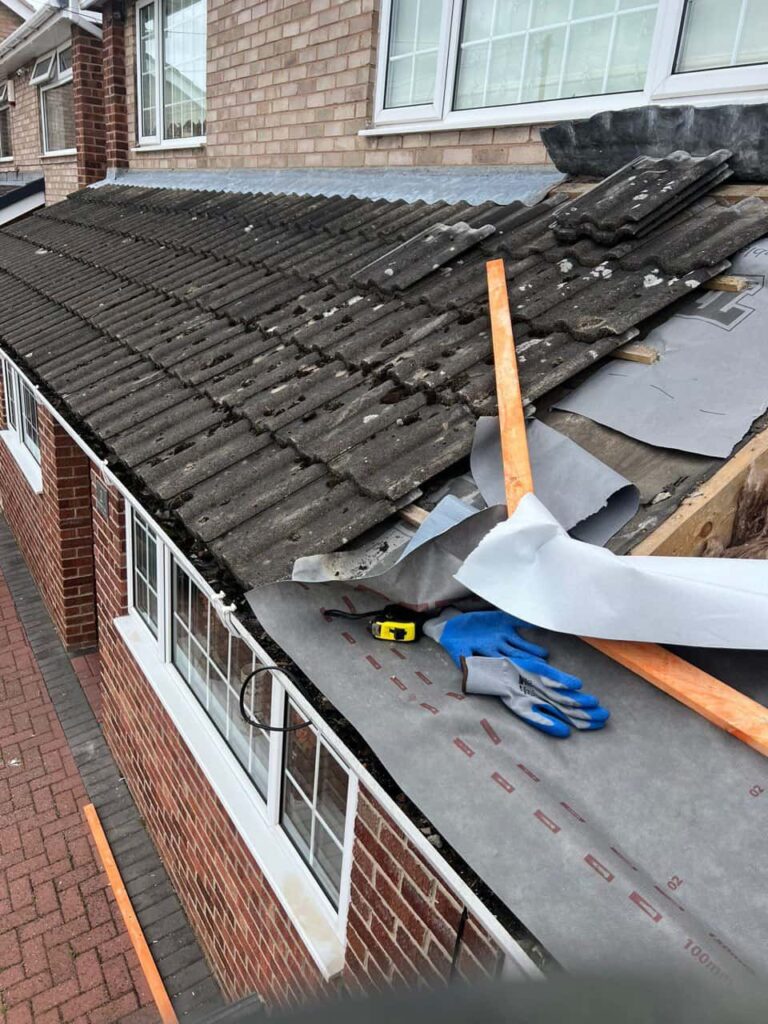
A new roof is more than a layer of tiles or slates placed over a property. It is a carefully designed system in which the covering, underlay, battens, fixings, flashings, ventilation and drainage details work together.
Each component has a specific role in managing rainfall, resisting wind pressure and accommodating changes in temperature and moisture. Professional design and installation are therefore essential if the roof is to provide reliable protection throughout the year.
How the Different Parts of a New Roof Provide Weather Protection
A well-built roof manages water in layers, secures materials against wind and allows controlled movement as conditions change. Its performance depends on the quality of the complete installation rather than any single component.
The Roof Pitch Helps Rainwater Drain Away
The angle of a pitched roof allows rainwater to move down the covering towards the gutters. The selected tiles or slates must be suitable for that pitch, as different products require specific overlaps to resist water penetration.
If the pitch, headlap or spacing is incorrect, wind-driven rain may pass beneath the covering. Accurate setting out ensures that each course directs water over the one below without leaving vulnerable gaps.
Flat roofs also require a carefully formed fall. Although the angle is less noticeable, the surface must still guide water towards the intended drainage points rather than allowing it to collect.
Tiles and Slates Form the Primary Barrier
Roof tiles and slates protect the structure from direct exposure to rain. They are arranged in overlapping courses so water passes from one unit to the next without reaching the layers beneath.
The covering must be laid consistently around:
- Ridges and hips
- Valleys
- Chimneys
- Roof windows
- Abutments
- Verges and eaves
- Changes in roof level
These junctions require careful detailing because they interrupt the regular pattern of the roof covering and can become vulnerable if installed incorrectly.
Underlay Provides Secondary Protection
Beneath the tiles or slates sits a roofing underlay. This secondary layer helps manage any moisture or wind-driven rain that passes beneath the outer covering.
The underlay must be laid with suitable overlaps and correctly detailed around penetrations and edges. If water reaches it, the material should direct that moisture towards the eaves rather than allowing it to enter the roof space.
Underlay is not intended to replace a correctly installed covering. It provides additional protection as part of the complete roofing system.
Battens and Fixings Resist Wind Movement
Battens support the tiles or slates and help maintain accurate spacing across the roof. They must be positioned and secured correctly so the covering remains evenly aligned.
Suitable nails, clips and other fixings hold the roof covering in place when wind creates lifting forces. The fixing method will depend on factors such as the type of covering, roof shape and the position of individual materials.
Particular attention is required around roof edges, ridges, hips and other exposed sections. These areas can experience greater wind pressure than the central part of a roof.
Flashing Protects Roof Junctions
Leadwork or other suitable flashing materials protect the points where the roof meets a chimney, wall or other structure. Flashing directs water over the roof covering and away from the junction.
Correctly installed leadwork is formed in sections that allow natural movement. Adequate laps, secure fixing and careful dressing help it remain weather-resistant without being restrained too rigidly.
Poorly formed flashing can admit water even when the surrounding tiles remain intact. This makes professional detailing especially important.
Valleys Manage Concentrated Water Flow
A roof valley is formed where two slopes meet and channels water from both areas. During heavy rain, a considerable volume of water may pass through this relatively narrow section.
The valley must therefore be correctly sized, supported and connected to the surrounding covering. Tiles or slates should be neatly cut and positioned so they do not restrict water flow or leave exposed gaps.
A well-constructed valley guides water towards the gutter while limiting the risk of debris collecting along its edges.
Ridges, Hips and Verges Protect Exposed Edges
Ridges cover the highest junction of the roof, while hips protect the external meeting points between slopes. Verges finish the edges at the gable ends.
These areas help close the roof against wind and rain. They need stable fixing and consistent alignment, as movement can create openings beneath the covering.
Modern installation methods can provide secure mechanical restraint while maintaining a neat finish. The appropriate system should suit the roof design and materials being used.
Ventilation Controls Moisture Within the Roof
Weather resistance is not only about preventing rain from entering. Moisture can also develop inside the roof through condensation when warm indoor air reaches colder surfaces.
Suitable ventilation allows air to circulate through the roof space and helps control moisture accumulation. The exact arrangement depends on the roof construction and how insulation is positioned.
A coordinated design ensures that insulation does not block ventilation routes and that the roof can manage internal moisture throughout seasonal temperature changes.
Materials Must Accommodate Thermal Movement
Roofing components expand and contract as temperatures rise and fall. Timber, leadwork, membranes and roof coverings each respond differently to seasonal conditions.
A professional installation allows for this natural movement through suitable joints, fixing methods and material dimensions. Restricting movement can lead to cracking, buckling or premature failure.
This is particularly important where large sections of material or several different components meet.
Gutters Complete the Water Management System
Once rainwater reaches the eaves, gutters collect it and direct it away from the roof. The roof covering, underlay and eaves details must connect correctly with the guttering to prevent water from running behind it.
Gutters should also have a suitable fall and clear route to their outlets. If they cannot carry water away efficiently, overflow may affect fascia boards, soffits and external walls.
Why Professional Installation Matters
The individual materials used on a new roof are only effective when they are installed as a coordinated system. Small inaccuracies in spacing, overlaps or junction details can create weak points that are difficult to identify later.
Professional roof construction includes careful planning, accurate setting out and close attention to concealed layers. This provides dependable protection rather than relying on the visible covering alone.
Conclusion
A new roof manages rain through suitable pitch, overlapping materials, underlay, flashings and effective drainage. Secure battens and fixings help it resist wind, while ventilation and carefully detailed joints allow the system to cope with moisture and seasonal movement.
The quality of these details determines how reliably the roof performs. Downham Market Roofing Repairs provides professional new roof installation in Downham Market, Norfolk. If your property requires a new roofing system, contact the team to arrange an assessment and discuss an appropriate solution.
Call us on: 01366 310 681
Click here to find out more about Downham Market Roofing Repairs
Click here to complete our contact form and see how we can help with your roofing needs.